Climate and monthly weather forecastVancouver, WA
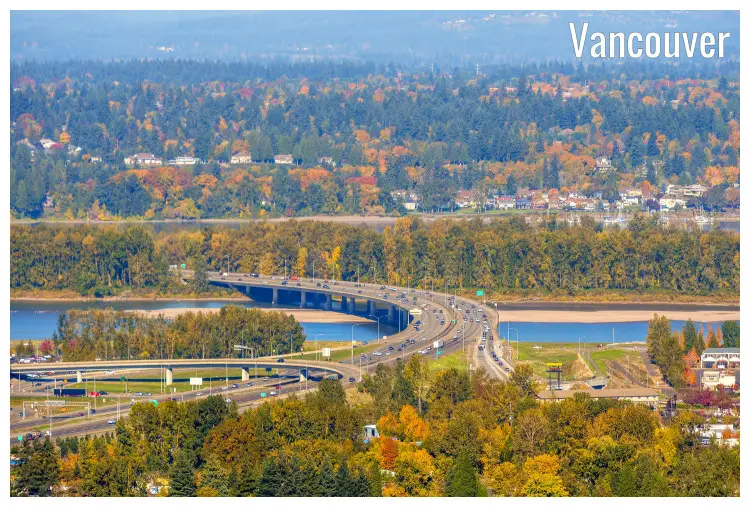
Climate and monthly weather forecast
The climate of Vancouver
Positioned in Washington, USA, Vancouver experiences a mild climate which is predominantly classified as a warm summer Mediterranean according to the Köppen climate classification. The weather is moderately variable and generally displays a distinct seasonal pattern. Highlights include warm, dry summers and mild, wet winters.Temperature variations throughout the year are demonstrative of this traditional seasonal shift. The highest recorded temperatures are noted from July to August, reaching up to 80.6°F (27°C), while the lowest drop to 34°F (1.1°C) occur in December. Humidity levels fluctuate slightly from a peak of 84% in winter months to a reduced 65% during the summer period.
An acknowledged pattern discernible in Vancouver's climate is the rainfall distribution. Throughout the year, precipitation is highest in December at a measurement of 5.08" (129mm), thereafter declining to its lowest during July at just 0.35" (9mm). Additionally, snowfall, although a rare occurrence, can be expected mainly during the winter months of January and February.
The best time to visit Vancouver
When choosing the best time to visit Vancouver, the warm, sunny and relatively dry summer period from June to August suggests itself. With temperatures peaking around 80.6°F (27°C) in August, and rain seldom at just 0.35" (9mm) in July, the city provides an inviting environment for a multitude of outdoor excursions. The abundance of daylight ranging from 14.9 hours in May to 15.3 in July amplifies the potential for long days of exploration in the city.The worst time to visit Vancouver
Conversely, the winter months from December through to February, mark a less desirable period for tourism. Cold temperatures dipping to lows around 34°F (1.1°C) in December are accompanied by frequent rain, with December typically experiencing the highest rainfall of 5.08" (129mm) annually. Furthermore, the daylight hours shrink to a yearly low of 8.8 in December, which can limit the number of daylight hours available for sightseeing.Spring weather in Vancouver
Spring in Vancouver, stretching from March to May, brings about gradual warmth as temperatures rise from 51.8°F (11°C) in March to 66.6°F (19.2°C) in May. Rainfall tapers off from 3.74" (95mm) in March to about 1.85" (47mm) by May end. Concurrently, there is a palpable expansion in daylight hours, reaching up to 14.9 hours in May, fostering longer and increasingly sunny days for local activities.Summer weather in Vancouver
Experiencing the warmest and driest conditions of the year, summer in Vancouver from June through August offers idyllic climatic conditions. With persistent warmth, temperature highs reach 80.6°F (27°C) in August, while rainfall remains low, particularly in July at 0.35" (9mm). Relatively low humidity and a generous range of 15.3 to 15.6 daylight hours contribute to pleasant, bright summer days well suited for open-air ventures.Autumn weather in Vancouver
The advent of autumn in Vancouver from September to November signals cooler temperatures, falling from 73°F (22.8°C) in September to a crisper 50.2°F (10.1°C) in November. Rainfall becomes more frequent, with November presenting the highest volume during this season, accumulating to 4.06" (103mm). Be prepared for substantial cloud cover, increasing from 33% in September to 55% by November end.Winter weather in Vancouver
Winters in Vancouver, spanning December to February, are characterized by relatively mild but wet conditions. The coldest month, December, witnesses temperatures plummeting to 34°F (1.1°C), but it is notable that snowfall is minimal with only 0.35" (9mm) reported in December. With rainfall reaching a peak of 5.08" (129mm) in December, winter holds the reputation for being the wettest season of the year.Weather in January
Vancouver, Washington ushers in the year with relatively temperate conditions, despite being in the deep throes of winter. The month sees a median humidity of 84%, becoming one of the moistest periods of the year. Despite this, clear skies can be rare due to high cloud cover, which makes it hard to predict sunshine hours with certainty. Weather in January »Weather in February
By February, the weather conditions witness relatively little change from January and it still retains some of the crisp winter notes. There is a subtle rise in both the highest and lowest temperature to 46.9°F (8.3°C) and 35.1°F (1.7°C) respectively. Weather in February »Weather in March
March symbolizes a noticeable turning point in the weather conditions of Vancouver, Washington. It brings with it a clear uptick in temperatures, fortelling the onset of spring. The changes in weather patterns could see increased outdoor activities, and plants around the city awakening from their winter hibernation. Weather in March »Weather in April
April brings a dramatic transformation to the weather in Vancouver as temperatures significantly increase, marking the full arrival of spring. Rainfall totals drop to a more manageable 3.19" (81mm), and the snowfall of previous months dissipates, rendering the city's landscape unrecognizable from its winter form. Weather in April »Weather in May
In May, the weather of Vancouver, Washington transforms almost overnight into that of summer, even though the calendar might suggest otherwise. With the warm climate settling in, there is often an air of cordiality and anticipation that permeates the city's streets. Weather in May »Weather in June
Come June, summer has truly entrenched itself in Vancouver with soaring temperatures and abundant sunlight. Clear skies dominate, encouraging locals to adopt a more leisurely lifestyle. Long days with over 15 hours of daylight make the city feel alive and bustling from morning to late in the night. Weather in June »Weather in July
July represents the pinnacle of summer and sees some of the warmest weather in Vancouver. Its clear sky and longer sunlight hours become the perfect backdrop for a round of picnics, barbecues, and a host of other outdoor activities. Weather in July »Weather in August
August weather in Vancouver, Washington sees a continuation of the warm temperatures from July but with a more marked decrease in humidity. Residents looking forward to the coolness of fall have to wait a bit longer as the days remain sun-kissed and pleasant. Weather in August »Weather in September
By the time September rolls around, subtle signs of the approaching fall start to creep into the weather. The days grow slightly shorter, while the explosion of heat lessens. People start to swap their summer clothing for the comfortable coziness of lightweight sweaters. Weather in September »Weather in October
October heralds a significant change in weather patterns in Vancouver, Washington, as the city fully embraces fall. A covering of golden leaves adds a touch of beauty to the cityscape, making autumn one of the city's most picturesque times. Weather in October »Weather in November
November in Vancouver brings a somber change in weather, as the vibrant autumn season fades and gives way to the colder temperatures of late fall. The prospect of the approaching winter begins to make its presence felt, as people start to unpack their winter clothing. Weather in November »Weather in December
By the time December arrives, winter is in full swing and the cityscape of Vancouver, Washington transforms to match the season. The wintry month sees a considerable decrease in temperature, with the city chilling under an average low temperature of 34°F (1.1°C). Weather in December »Published by: Weather U.S. | About Us
Data Sources | Weather Forecasting & Climate
Frequently asked questions
Average temperature
Vancouver, WA
The warmest month (with the highest average high temperature) is August (80.6°F).
The month with the lowest average high temperature is December (43.7°F).
The month with the highest average low temperature is August (54°F).
The coldest month (with the lowest average low temperature) is December (34°F).
Average pressure
Vancouver, WA
- Average pressure in January:
30.11"Hg - Average pressure in February:
30.08"Hg - Average pressure in March:
30.03"Hg - Average pressure in April:
30.06"Hg - Average pressure in May:
30.03"Hg - Average pressure in June:
30.03"Hg
- Average pressure in July:
30.03"Hg - Average pressure in August:
30"Hg - Average pressure in September:
30.01"Hg - Average pressure in October:
30.05"Hg - Average pressure in November:
30.06"Hg - Average pressure in December:
30.1"Hg
The month with the highest atmospheric pressure is January (30.11"Hg).
The month with the lowest atmospheric pressure is August (30"Hg).
Average wind speed
Vancouver, WA
- Average wind speed in January:
5.5mph - Average wind speed in February:
5.3mph - Average wind speed in March:
5.2mph - Average wind speed in April:
4.7mph - Average wind speed in May:
4.1mph - Average wind speed in June:
4mph
- Average wind speed in July:
4mph - Average wind speed in August:
3.8mph - Average wind speed in September:
3.9mph - Average wind speed in October:
4.5mph - Average wind speed in November:
5.2mph - Average wind speed in December:
5.2mph
The windiest month (with the highest average wind speed) is January (5.5mph).
The calmest month (with the lowest average wind speed) is August (3.8mph).
Average humidity
Vancouver, WA
The months with the highest relative humidity are January and February (84%).
The month with the lowest relative humidity is August (65%).
Average rainfall
Vancouver, WA
- Average rainfall in January:
5.04" - Average rainfall in February:
3.62" - Average rainfall in March:
3.74" - Average rainfall in April:
3.19" - Average rainfall in May:
1.85" - Average rainfall in June:
1.46"
- Average rainfall in July:
0.35" - Average rainfall in August:
0.39" - Average rainfall in September:
1.73" - Average rainfall in October:
3.78" - Average rainfall in November:
4.06" - Average rainfall in December:
5.08"
The wettest month (with the highest rainfall) is December (5.08").
The driest month (with the least rainfall) is July (0.35").
Average rainfall days
Vancouver, WA
- Average rainfall days in January:
19.3 days - Average rainfall days in February:
17.3 days - Average rainfall days in March:
20.6 days - Average rainfall days in April:
19.4 days - Average rainfall days in May:
13.8 days - Average rainfall days in June:
11.1 days
- Average rainfall days in July:
5.4 days - Average rainfall days in August:
4.9 days - Average rainfall days in September:
10.8 days - Average rainfall days in October:
15.8 days - Average rainfall days in November:
19.1 days - Average rainfall days in December:
19.6 days
The month with the highest number of rainy days is March (20.6 days).
The month with the least rainy days is August (4.9 days).
Average snowfall
Vancouver, WA
The month with the highest snowfall is February (1.42").
The months with the least snowfall are April, May, June, July, August, September and October (0").
Average snowfall days
Vancouver, WA
- Average snowfall days in January:
1.3 days - Average snowfall days in February:
2.1 days - Average snowfall days in March:
1.4 days - Average snowfall days in April:
0 days - Average snowfall days in May:
0 days - Average snowfall days in June:
0 days
- Average snowfall days in July:
0 days - Average snowfall days in August:
0 days - Average snowfall days in September:
0 days - Average snowfall days in October:
0 days - Average snowfall days in November:
0.5 days - Average snowfall days in December:
0.6 days
The month with the highest number of snowfall days is February (2.1 days).
The months with the least snowfall days are April, May, June, July, August, September and October (0 days).
Average daylight / Average sunshine
Vancouver, WA
- Average daylight in January:
9h and 12min - Average daylight in February:
10h and 24min - Average daylight in March:
12h and 0min - Average daylight in April:
13h and 36min - Average daylight in May:
14h and 54min - Average daylight in June:
15h and 36min
- Average daylight in July:
15h and 18min - Average daylight in August:
14h and 6min - Average daylight in September:
12h and 30min - Average daylight in October:
10h and 54min - Average daylight in November:
9h and 30min - Average daylight in December:
8h and 48min
The month with the longest days is June (Average daylight: 15h and 36min).
The month with the shortest days is December (Average daylight: 8h and 48min).
- Average sunshine in January:
4h and 6min - Average sunshine in February:
4h and 6min - Average sunshine in March:
5h and 48min - Average sunshine in April:
7h and 36min - Average sunshine in May:
8h and 48min - Average sunshine in June:
9h and 24min
- Average sunshine in July:
10h and 48min - Average sunshine in August:
11h and 0min - Average sunshine in September:
9h and 18min - Average sunshine in October:
5h and 24min - Average sunshine in November:
4h and 36min - Average sunshine in December:
4h and 12min
The month with the most sunshine is August (Average sunshine: 11h and 0min).
The months with the least sunshine are January and February (Average sunshine: 4h and 6min).
Average sunshine days
Vancouver, WA
- Average sunshine days in January:
10.4 days - Average sunshine days in February:
7.9 days - Average sunshine days in March:
9.1 days - Average sunshine days in April:
8.8 days - Average sunshine days in May:
15.6 days - Average sunshine days in June:
16.5 days
- Average sunshine days in July:
24.1 days - Average sunshine days in August:
23.8 days - Average sunshine days in September:
17.7 days - Average sunshine days in October:
14 days - Average sunshine days in November:
9.5 days - Average sunshine days in December:
9.9 days
The month with the most sunshine days is July (24.1 days).
The month with the least sunshine days is February (7.9 days).
Average UV index
Vancouver, WA
The month with the highest UV index is July (UV index 6).
The months with the lowest UV index are January, February, November and December (UV index 2).
Average cloud cover
Vancouver, WA
The month with the most cloud cover is February (Cloud cover 58).
The month with the least cloud cover is August (Cloud cover 23).
Average visibility
Vancouver, WA
The months with the highest visibility are July, August and September (6mi).
The months with the lowest visibility are January, February, March, April, May, June, October, November and December (5mi).


