November weather forecastAppleton, WI
November
Weather in November
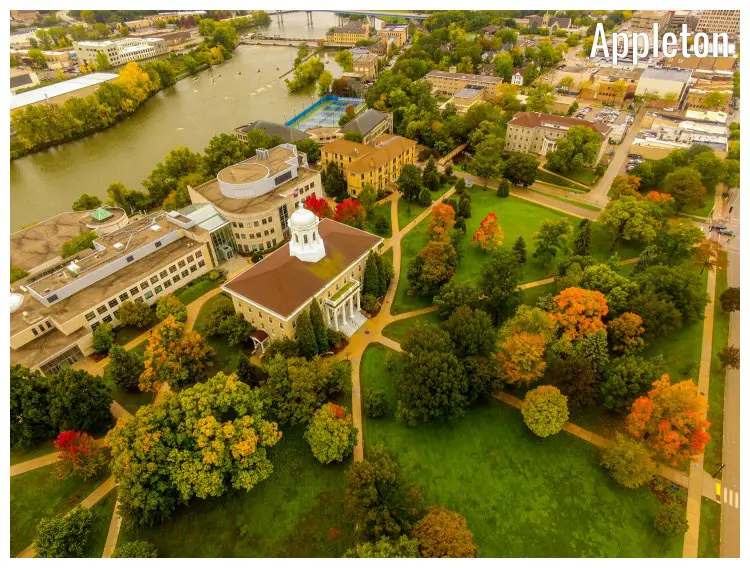
November ushers in winter’s chill as temperatures drop to an average low of 30°F (-1.1°C). The first snow of the season often touches down in this month, hinting at the impending winter. Wind speeds pick up, averaging at 9.8mph (15.8km/h), adding a chilly bite to the air in Appleton. Fall foliage is at its peak during early November, making it an ideal time for scenic walks. Towards the end of the month, festivities are underway in preparation for the upcoming holidays.Temperature
November in Appleton indicates a shift in the average high-temperature, from October's refreshing 55.8°F (13.2°C) to a cold 41.5°F (5.3°C). Appleton reports an average low-temperature of 30°F (-1.1°C) during the nights of November.Humidity
In Appleton, the average relative humidity in November is 77%.Rainfall
In Appleton, in November, it is raining for 9.2 days, with typically 1.5" (38mm) of accumulated precipitation. Throughout the year, in Appleton, there are 131.1 rainfall days, and 24.45" (621mm) of precipitation is accumulated.Snowfall
Months with snowfall in Appleton are January through May, October through December. In Appleton, during November, snow falls for 5.9 days and regularly aggregates up to 1.61" (41mm) of snow. Throughout the year, there are 56.9 snowfall days, and 21.97" (558mm) of snow is accumulated.Daylight
In Appleton, Wisconsin, the average length of the day in November is 9h and 38min.On the first day of November in Appleton, Wisconsin, sunrise is at 7:31 am and sunset at 5:42 pm CDT. On the last day of the month, sunrise is at 7:08 am and sunset at 4:16 pm CST.
Note: On Sunday, November 3. 2024, at 2:00 am, Daylight Saving Time ends, and the time zone changes from CDT to CST. Daylight Saving Time starts again on Sunday, March 9. 2025, at 2:00 am; consequently, the time zone reverts from CST to CDT.
Sunshine
In November, the average sunshine is 4.8h.UV index
The months with the lowest UV index in Appleton, Wisconsin, are January, November and December, with an average maximum UV index of 1. A UV Index value of 2, and less, symbolizes a minimal health vulnerability from exposure to the Sun's UV radiation for average individuals.Note: In November, a regular UV index of 1 translates into these guidelines:
Although prolonged sun exposure does not typically bother most people, children, babies, and those with sensitive skin should always have protection. Direct exposure to the Sun's intense radiation around midday should be avoided for health reasons. Limit sun-induced ocular harm with sunglasses that feature UVA and UVB filtration. Heed this! Snow reflection can almost augment the UV radiation of the sun by double.
Published by: Weather U.S. | About Us
Data Sources | Weather Forecasting & Climate
Frequently asked questions
Average temperature in November
Appleton, WI
- Average high temperature in November: 41.5°F
The warmest month (with the highest average high temperature) is July (78.4°F).
The month with the lowest average high temperature is January (21.9°F).
- Average low temperature in November: 30°F
The month with the highest average low temperature is July (61.2°F).
The coldest month (with the lowest average low temperature) is January (10.8°F).
Average pressure in November
Appleton, WI
- Average pressure in November: 30.06"Hg
The months with the highest atmospheric pressure are January, February and March (30.09"Hg).
The month with the lowest atmospheric pressure is June (29.91"Hg).
Average wind speed in November
Appleton, WI
- Average wind speed in November: 9.8mph
The windiest month (with the highest average wind speed) is April (9.9mph).
The calmest months (with the lowest average wind speed) are July and August (7.1mph).
Average humidity in November
Appleton, WI
- Average humidity in November: 77%
The months with the highest relative humidity are January and February (88%).
The month with the lowest relative humidity is April (75%).
Average rainfall in November
Appleton, WI
- Average rainfall in November: 1.5"
The wettest month (with the highest rainfall) is May (3.54").
The driest month (with the least rainfall) is February (1.06").
Average rainfall days in November
Appleton, WI
- Average rainfall days in November: 9.2 days
The month with the highest number of rainy days is May (15.9 days).
The month with the least rainy days is January (3.9 days).
Average snowfall in November
Appleton, WI
- Average snowfall in November: 1.61"
The month with the highest snowfall is January (5.79").
The months with the least snowfall are June, July, August and September (0").
Average snowfall days in November
Appleton, WI
- Average snowfall days in November: 5.9 days
The month with the highest number of snowfall days is January (14.2 days).
The months with the least snowfall days are June, July, August and September (0 days).
Average daylight in November /
Average sunshine in November
Appleton, WI
- Average daylight in November: 9h and 36min
The month with the longest days is June (Average daylight: 15h and 30min).
The month with the shortest days is December (Average daylight: 8h and 54min).
- Average sunshine in November: 4h and 48min
The month with the most sunshine is July (Average sunshine: 10h and 6min).
The month with the least sunshine is January (Average sunshine: 3h and 24min).
Average sunshine days in November
Appleton, WI
- Average sunshine days in November: 15.7 days
The month with the most sunshine days is September (16.4 days).
The month with the least sunshine days is April (11.8 days).
Average UV index in November
Appleton, WI
- Average UV index in November: 1
The months with the highest UV index are May, June, July and August (UV index 5).
The months with the lowest UV index are January, November and December (UV index 1).
Average cloud cover in November
Appleton, WI
- Average cloud cover in November: 49
The month with the most cloud cover is January (Cloud cover 63).
The month with the least cloud cover is July (Cloud cover 32).
Average visibility in November
Appleton, WI
- Average visibility in November: 6mi
The months with the highest visibility are March, April, May, June, July, August, September, October and November (6mi).
The months with the lowest visibility are January, February and December (5mi).


